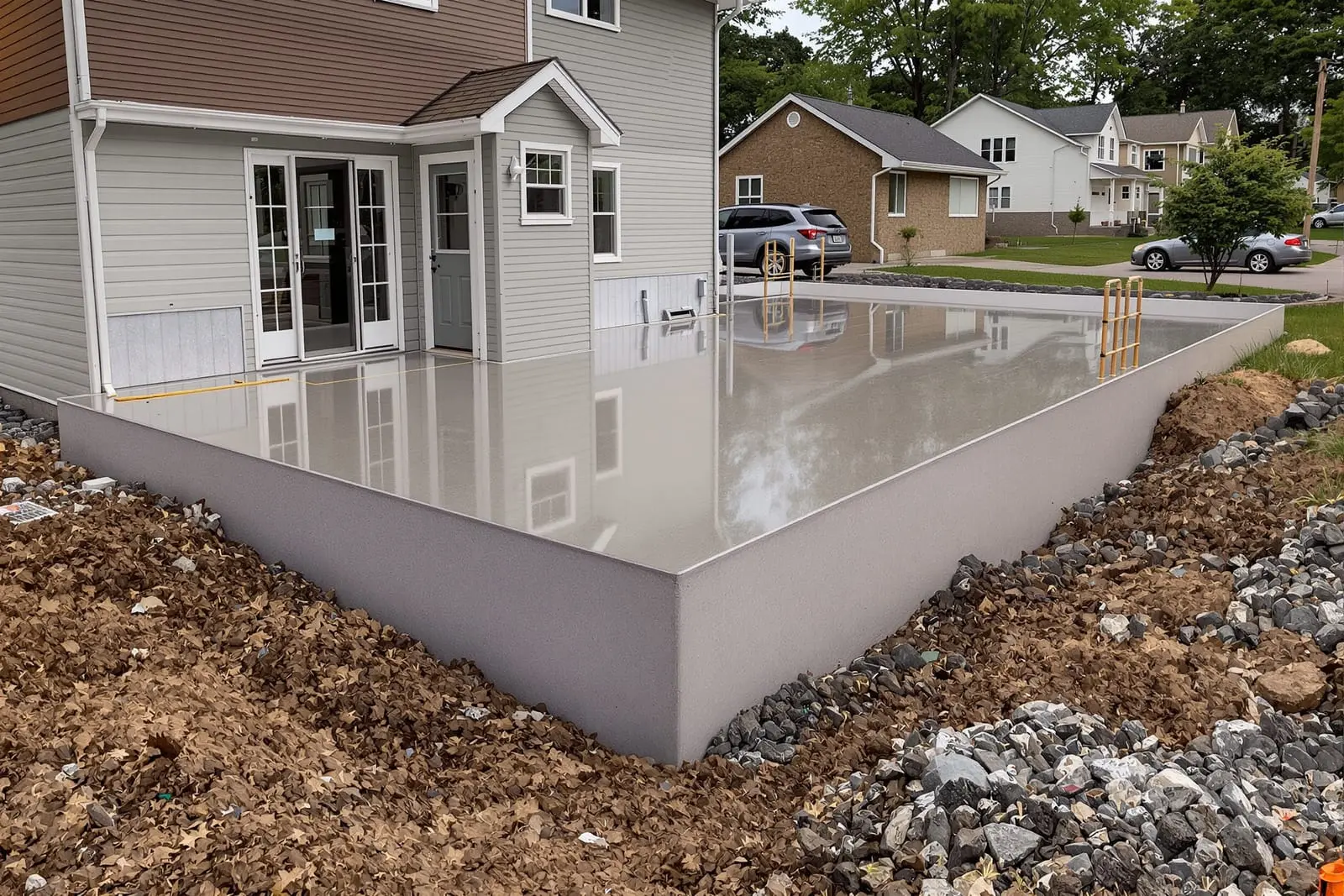
Our team installs commercial concrete foundations in Albuquerque, NM for offices, warehouses, and retail buildings. We handle large scale footing systems, grade beams, and slabs designed by your engineer. Rely on accurate layout, reinforcement, and pours that meet strict structural and schedule requirements.
Primetime Concrete Albuquerque provides professional commercial concrete foundations throughout Albuquerque, NM and the surrounding area. Our licensed, insured crew delivers safe, clean, on-time work with a free estimate before anything begins. Call (505) 578-2685 or request your free quote.
Albuquerque commercial foundations done for the real site you have
Commercial concrete foundations in Albuquerque are not one size fits all. Primetime Concrete Albuquerque starts every project by looking at what you actually plan to build, what is already on or next to your site, and what the soil is doing under the surface. A tilt‑up warehouse off I‑25 needs something different than a small retail shell on Central or a medical office near Presbyterian.
We coordinate with your architect and structural engineer to confirm loads, column layouts, equipment pads, and any special requirements like vibration control for medical or lab spaces. For older infill sites, especially near downtown and the University area, we pay close attention to existing utilities, adjacent structures, and past use of the lot. Many local commercial infill parcels have patched asphalt, buried debris, or abandoned foundations that have to be dealt with before we pour anything new.
Our goal at this stage is simple: define exactly which foundation system fits your building, soil conditions, and schedule, without overspending on concrete or rework later. That is how we keep costs predictable and inspections clean.
Soils, frost, and footing design for Albuquerque conditions
Albuquerque has mostly semi‑arid, granular soils, but pockets of expansive clay and fill show up all over the metro, especially where older buildings were removed. For commercial concrete foundations, Primetime Concrete Albuquerque always works off a geotechnical report when one is provided. If you do not have a soils report yet, we let you know early because footing size, depth, and reinforcing steel all depend on that information.
Typical commercial spread footings in our area are set deeper than residential work and are sized to carry higher column and wall loads from steel or concrete frames. For many projects in the Heights and Westside, we are dealing with competent native material at relatively shallow depths, so standard spread footings with continuous grade beams work well. In parts of the Valley and older industrial zones, fill and softer soils often require larger footings, thickened mats, or more extensive grade beams to tie the structure together.
Frost depth is modest here, but commercial code and engineer specs still control footing depth. We do not guess. We dig test holes where needed, verify bearing conditions on site, and adjust footing bottoms only with engineer approval. For clients, the key point is that footing design is about actual soil support and structural loads, not a rule of thumb from somewhere else.
Forming, rebar, and anchor installation that match your structural plans
A commercial foundation only performs as designed if the forming and reinforcing are accurate. Primetime Concrete Albuquerque lays out all footing lines, column centers, and wall locations with a laser and checks them against control points from your surveyor. On tight infill sites, we often use batter boards or nail stakes so that layout can survive multiple inspections and utility work without shifting.
We build footing and foundation forms heavy enough to hold shape under large pours and pump pressures, especially on big box and industrial projects where thick slabs and deep footings are common. Corners, step‑downs, and elevation changes are locked in before any steel goes in so you do not get surprises in finished floor heights or door thresholds.
Rebar placement follows the structural drawings: bar size, spacing, laps, hooks, and chairs. We tie and support the steel so it stays in place when the concrete goes in, which is critical for heavily loaded columns, shear walls, and equipment pads. Anchor bolts, base plates, hold‑downs, and embedded items for steel columns or masonry walls are set off shop drawings, not guesses. We double‑check bolt patterns and elevations with the steel contractor because if those are wrong, your framing start date slips.
This is where many low‑bid foundation jobs fall apart. If you are comparing prices, ask every contractor exactly how they will handle layout, rebar support, and anchor verification. That is where schedule delays and change orders often begin.
Concrete placement, finishing, and curing for commercial duty
For commercial concrete foundations, mix design and placement are tied directly to performance. Primetime Concrete Albuquerque uses ready‑mix suppliers who consistently hit the specified PSI and slump, and we call out mixes that handle our climate and your structural needs. Heavier structures and loading docks may use higher strength concrete or different aggregate, while interior slabs under finished flooring might need a mix that limits shrinkage cracking.
On most commercial foundation pours we use pumps to move concrete quickly and reach confined areas between forms and rebar. Our crew keeps a steady flow going so there are no cold joints or weak transitions between truck loads. Vibrators are used on walls, grade beams, and deep footings to eliminate honeycombing around rebar and embeds.
Finishing for foundations is about function more than looks. Exposed stem walls and foundation faces are struck off, edged, and brushed or rubbed for a clean, durable surface. Where slab‑on‑grade is poured with the foundation system, we coordinate flatness and levelness with your flooring plan. If you are installing polished concrete, epoxy, or sensitive tile, that tolerance needs to be established before we place the slab.
Curing is not optional in our dry climate. Wind, sun, and low humidity in Albuquerque pull moisture from fresh concrete fast, which can cause surface cracking and reduced strength. We use curing compound, wet curing, or coverings as appropriate, and we plan pours to avoid the worst heat and afternoon storms when possible. This is one of the simplest ways to protect your investment in the foundation.
What really drives cost and schedule on commercial concrete foundations
Most clients want to know why two bids can be very different for what sounds like the same foundation work. Primetime Concrete Albuquerque is direct about cost drivers so you can budget with fewer surprises.
Major factors include excavation volume, foundation type, rebar quantity, and access for equipment. Deep footings, large grade beams, and heavy reinforcement for multi‑story or industrial buildings will naturally cost more than a single‑story retail pad with lighter loads. Sites with limited access, such as tight lots in Nob Hill or downtown, may require smaller equipment or more hand work, which affects labor time.
Soils issues are another cost driver. If the geotechnical report calls for over‑excavation, engineered fill, or a mat foundation, that needs to be priced correctly from the start. Underbidding this part is how projects end up with big change orders after the first inspections.
Schedule also affects cost. If you have a strict turnover date for a tenant improvement or opening, we look at crew size, sequencing, and pour sizes that will keep structural steel, framing, or tilt panels on track. Night or weekend pours, traffic control on busy streets, and multiple smaller pours to work around inspections can add cost but may be necessary to keep your overall project timeline intact.
When you talk with us, bring whatever drawings, soils reports, and schedules you have. We can often show you where phasing foundations, splitting pours, or adjusting details might save money without weakening the structure.
How Primetime Concrete Albuquerque fits into your commercial project team
On commercial concrete foundations, you need a contractor who understands they are one part of a larger team. Primetime Concrete Albuquerque coordinates closely with your general contractor, engineer, steel erector, plumber, and electrician so the work under the slab and at the foundation line is correct before it is buried.
Before we mobilize, we confirm utility rough‑ins, slab penetrations, and equipment pad locations with the trades. Missed conduits or undersized block‑outs are some of the most expensive mistakes to fix once concrete is placed. We work from updated drawings and RFI responses so the foundation reflects the current design, not an outdated plan set.
Inspections are built into our schedule. We know what local building officials typically look for on commercial foundations in Albuquerque and surrounding areas, and we aim to have steel, forms, and site conditions ready so they can sign off without multiple trips. Where inspections reveal a concern, we address it with clear communication and documented fixes so it does not become a future liability.
If you are at the early planning stage for a warehouse, retail center, office, or specialty commercial space anywhere in the Albuquerque metro, you do not need a finished plan set to start the conversation. Share your concept, building size, and potential site, and we can outline what your commercial concrete foundations will likely involve, approximate budget ranges, and the key decisions that will matter later in design and permitting.
“
Professional commercial concrete foundations & footings, done right the first time, quality materials, honest pricing, and results that last.
Primetime Concrete Albuquerque
Commercial Concrete Foundations & Footings Across Our Service Area