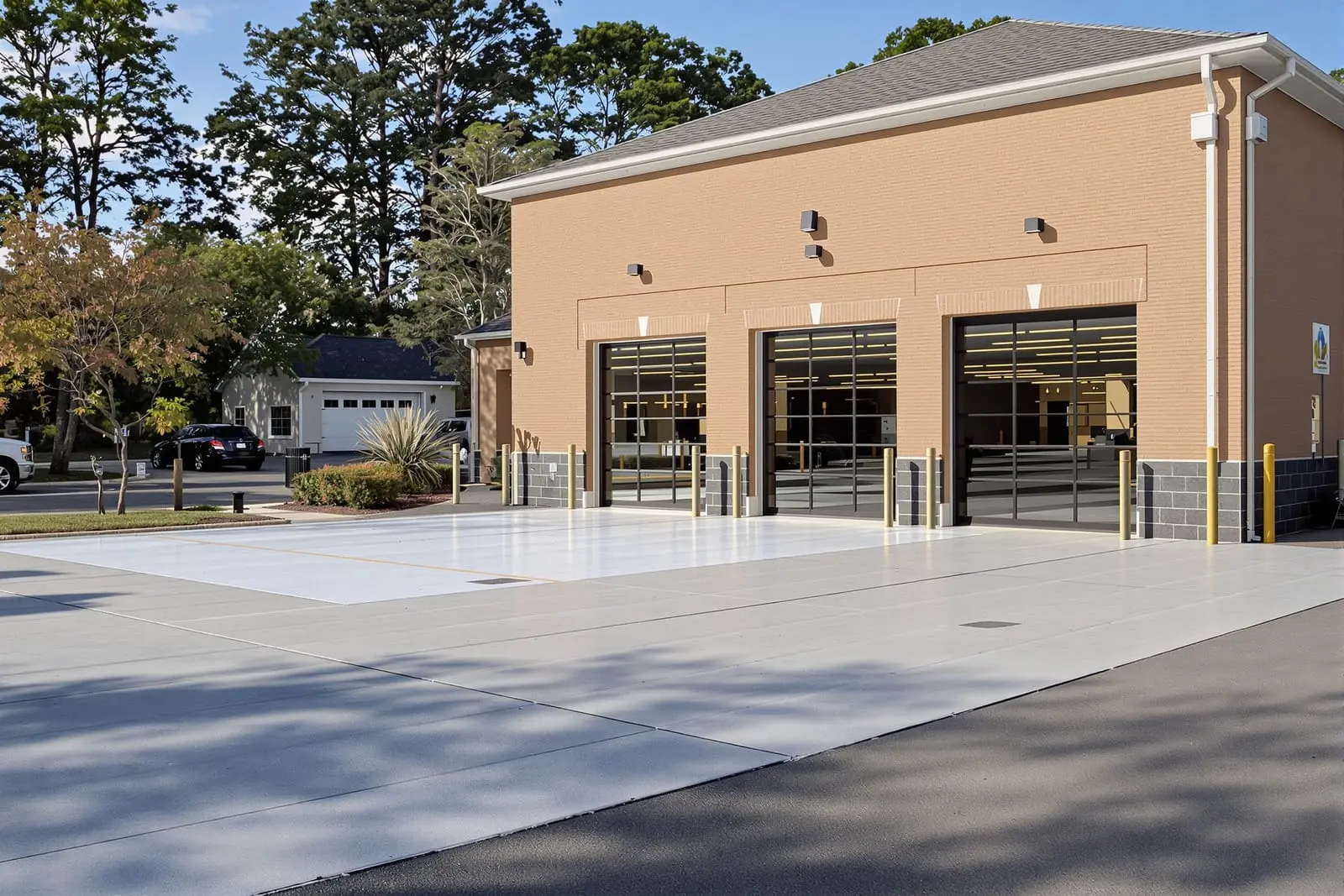
We install commercial concrete slabs in Albuquerque, NM for loading docks, dumpster pads, and equipment areas. Our heavy duty mixes and reinforcement stand up to truck traffic and point loads. Keep operations safe and efficient with properly designed and poured loading surfaces.
Primetime Concrete Albuquerque provides professional commercial concrete slab throughout Albuquerque, NM and the surrounding area. Our licensed, insured crew delivers safe, clean, on-time work with a free estimate before anything begins. Call (505) 578-2685 or request your free quote.
Loading Docks & Commercial Slabs Built for Albuquerque Conditions
Loading docks and commercial concrete slabs in Albuquerque have to deal with intense sun, wide temperature swings, and occasional heavy storms. Primetime Concrete Albuquerque designs and installs each slab with these local conditions in mind, so your dock or floor stays flat, safe, and usable for years.
Whether you are loading freight, parking delivery trucks, operating forklifts, or supporting heavy pallet racks, the slab underneath must be engineered for the real loads you see every day. We start by asking detailed questions about your operation: truck types and axle loads, forklift weights, rack layouts, moisture exposure, and whether you expect future equipment upgrades. This lets us design a commercial concrete slab that fits how your Albuquerque facility actually works, instead of offering a one size fits all product.
We routinely install slabs and loading areas for warehouses near the Sunport, small manufacturers in the North Valley, retail centers along Coors, and multi tenant buildings throughout the metro. Every site has different soil conditions, traffic patterns, and drainage needs, so the design for a downtown renovation will not match a new build on the Westside. That local experience is built into every loading dock and slab we pour.
How We Design a Commercial Concrete Slab for Your Facility
A durable commercial concrete slab starts with subgrade investigation. In Albuquerque, native soils can range from sandy loam near the river to caliche and fill dirt on the mesas. Primetime Concrete Albuquerque checks soil compaction, moisture, and depth of any existing fill so we can specify the right base thickness and preparation.
After we understand your soil, we size the slab based on loading. For typical warehouse floors, we often pour 5 to 6 inch slabs with reinforced concrete and a properly compacted aggregate base. For loading docks and truck aprons where semis back in, thickness can increase to 8 inches or more with heavier rebar or welded wire reinforcement. If you use high capacity racks or very heavy forklifts, we may recommend thicker slab sections or isolated footers under rack posts.
We also consider surface treatment and safety. For dock areas, we usually finish with a broom texture that provides traction for forklifts and foot traffic even when surfaces are dusty or slightly wet. Indoors, where you might need easy cleaning or improved light reflectivity, we can trowel and then mechanically polish or apply densifiers and sealers tailored for commercial traffic. Every design choice is explained in plain language so you know exactly what you are getting and why it suits your specific operation.
Step by Step: Our Loading Dock & Slab Installation Process
Primetime Concrete Albuquerque follows a structured process that keeps your operation in mind and reduces downtime.
1) Site assessment and layout. We verify property lines, dock locations, truck approach paths, and existing grades. On older Albuquerque buildings, dock heights can vary, so we measure trailer deck heights from your actual fleet to match the new dock elevation correctly.
2) Excavation and base prep. We remove any unsuitable soils, organic material, or broken pavement. Then we install and compact a graded aggregate base, often 4 to 8 inches thick, depending on loads and soil quality. Proper compaction is documented so you are not left with a slab that settles later.
3) Forms, reinforcement, and embeds. We set sturdy forms to control edges and elevations. Then we place rebar or welded wire mesh, chair it to the correct height, and install any anchor bolts, pipe sleeves, dock leveler frames, and conduit that must be cast into the slab. This is the stage where careful planning avoids costly saw cutting or drilling later.
4) Concrete placement and finishing. We order commercial grade concrete mixes suitable for Albuquerque’s climate and your load requirements, often with low water cement ratios and admixtures for strength and durability. Our crew places the concrete, vibrates it to remove air pockets, then strikes off and finishes the surface to the agreed texture or polish level.
5) Joint cutting and curing. We cut control joints at calculated spacing to reduce random cracking and apply curing methods (curing compounds or wet curing) that help the slab reach its designed strength. This step is crucial under our high desert sun, where unprotected slabs can dry too fast and weaken.
6) Final inspection and handoff. We walk the slab with you, review joint locations, slopes, and embed placement, and discuss recommended cure time before you place racks, forklifts, or heavy trucks on the new surface.
Material Options, Reinforcement, and Finish Choices
Different commercial uses in Albuquerque call for different slab specifications, so we offer clear, practical options instead of a single default package.
Concrete mixes: For most commercial concrete slabs we use 4,000 to 5,000 psi mixes, often with air entrainment if the area will see freeze thaw conditions or frequent water exposure. In high load or dock apron areas we may specify a higher strength mix or fibers to help with crack control.
Reinforcement: Traditional rebar grids are common for loading docks that see heavy trucks, especially where trailers rest on landing gear. For warehouse slabs we might use welded wire reinforcement or a combination of rebar and macro synthetic fibers for better crack distribution. We explain spacing, bar size, and fiber type in your proposal so you know what is inside the concrete, not just what you can see on top.
Finishes: Outdoor dock slabs typically receive a medium broom finish for slip resistance. Interior commercial slabs might be machine troweled, burnished, or polished depending on your cleaning needs and whether you use narrow aisle equipment. For food or manufacturing facilities we can integrate slab slopes toward trench drains, apply chemical resistant sealers, or coordinate with epoxy floor installers.
Jointing and load transfer: For very heavy traffic or narrow aisle rack systems we can discuss doweled contraction joints or thicker edge beams to reduce differential movement at joints and help forklifts travel smoothly. These choices can significantly extend slab life and reduce maintenance costs on equipment.
Cost Factors and How to Plan Your Project Budget
Every loading dock and commercial concrete slab we install is custom priced, but there are consistent factors that drive cost in Albuquerque. Understanding them helps you budget accurately and compare bids fairly.
Thickness and size are the most visible drivers. A 4 inch interior slab with light shelving has a very different cost profile from an 8 inch dock apron designed for daily semi traffic. Site conditions matter too. If we encounter loose fill, pockets of debris from previous construction, or need to remove old asphalt, preparation costs increase but also prevent expensive failures later.
Access is a big local factor. In dense parts of Albuquerque, like older industrial corridors, it may be harder to bring in concrete trucks or pumping equipment. Tight sites or work inside existing buildings can require more labor for moving, placing, and finishing concrete. If your operation must stay open, we might phase work in sections or pour at off hours, which can influence the schedule and labor costs.
Add ons such as dock leveler pits, bollard footings, thicker approach aprons, or embedded rails for specialized equipment will affect the price. Primetime Concrete Albuquerque provides itemized proposals that separate base slab work from optional features, so you can see where your money is going and adjust to meet your budget without sacrificing critical performance.
Common Problems We Prevent and What to Ask Before You Hire
Most slab and loading dock headaches in Albuquerque show up a year or two after construction: settlement at dock doors, cracked corners where trailers sit, ponding water at bay entrances, or uneven joints that beat up forklifts. Primetime Concrete Albuquerque designs and builds specifically to avoid these issues.
We combat settlement by taking subgrade and base preparation seriously and by thickening concrete at critical points, such as under dock levelers and truck landing gear. We manage cracking through correct joint spacing, proper reinforcement placement, and realistic expectations about how concrete behaves in our climate. Some hairline cracking is normal, but pattern, location, and movement can be controlled if the slab is designed correctly.
Drainage is another frequent problem. Older facilities around Albuquerque sometimes have loading areas that hold water near the door line, which can freeze in winter or accelerate joint damage. We set slopes carefully, coordinate with door installers, and, when needed, add trench or area drains to keep water moving away from buildings and work zones.
Before you hire any contractor for a commercial concrete slab, ask to see example projects with similar loading conditions, not just generic flatwork. Request details about slab thickness, reinforcement type, joint layout, concrete strength, and curing plan. A trustworthy contractor will welcome those questions. When you work with Primetime Concrete Albuquerque, we walk you through those points upfront so you know exactly how your loading docks and slabs are engineered to support your business long term.
“
Professional loading docks & commercial slabs, done right the first time, quality materials, honest pricing, and results that last.
Primetime Concrete Albuquerque
Loading Docks & Commercial Slabs Across Our Service Area